What is rendering?
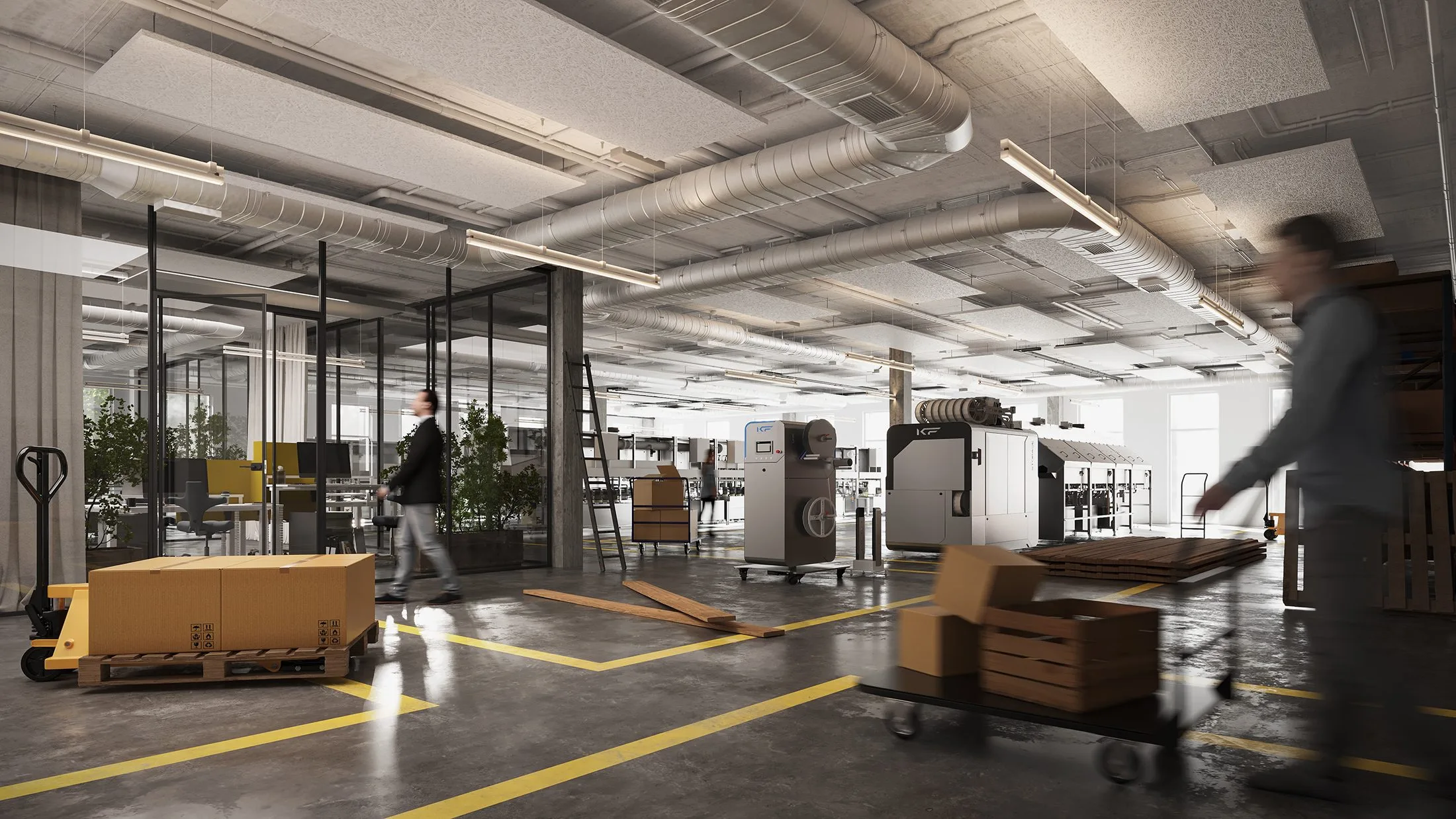
Rendering is the technical process by which a computer calculates a finished two-dimensional image or video from a three-dimensional model. The rendering software — also called a render engine — simulates the physical laws of light, reflection and material to depict the scene the way a camera would capture it. In architecture, rendering is the compute step that turns a CAD plan or 3D model into a photoreal image ready for marketing, competition entries or permit applications.
The term originates from the film and computer graphics industry and entered mainstream use in the 1990s via architectural visualization, advertising and product design. Today, rendering is the core technology behind all photoreal 3D depictions — from feature films to furniture catalogues to real estate listings on homegate.
Important: rendering and visualization are not the same. Rendering refers only to the compute step, a visualization is the full end result including framing, lighting direction and post-production. The distinction is detailed on our dedicated page Rendering vs. visualization.
How rendering works technically
At its core, a render engine simulates the behaviour of light in a 3D scene: it calculates how rays leave a source, hit surfaces, are absorbed, reflected or refracted, and eventually return to the virtual camera. Millions of these ray interactions build up the final image. The modern rendering pipeline combines three core technologies.
- 01.Physically Based Rendering (PBR) — materials are defined via physical parameters such as roughness, metallic value, refraction index and normal maps. An oiled oak plank reflects differently than a sealed one, a brushed brass handle differently than a polished one. Industry standard since around 2015.
- 02.Global Illumination (GI) — simulation of indirect light propagation. When sunlight hits a white floor, the floor tints the ceiling in a slightly yellowish hue. Without GI, rooms feel flat and “digital”; with GI, the depth emerges that makes an image feel real.
- 03.Ray Tracing / Path Tracing — following individual light rays through the scene, including reflections, refractions and transparencies. Compute-heavy but physically correct. Modern GPUs (NVIDIA RTX, AMD Radeon RX) accelerate ray tracing at the hardware level by multiples.
Types of rendering
Depending on the use case, two fundamental rendering approaches differ radically in compute time and quality.
Offline rendering (Production)
Compute time per image: minutes to hours. Delivers photoreal quality with full material, light and reflection depth. Used in architectural visualization, product advertising, film VFX. Common engines: V-Ray, Corona, Arnold, Redshift, Octane. Output is a static image for print, web or brochure use.
Real-time rendering
Compute time per image under 33 ms (30 FPS minimum) down to under 8 ms (120 FPS). Quality slightly below offline but interactively navigable. Used in 360° tours, virtual reality, video games, configurators. Common engines: Unreal Engine, Unity, Three.js, Cycles (Blender). Since 2020, GPU ray tracing has closed the quality gap significantly.
For architectural rendering in the Swiss marketing context, we rely on offline rendering (photo quality for the brochure); for 360° tours and interactive experiences on our 360° tour page, we use the real-time pipeline.
Rendering in architectural visualization
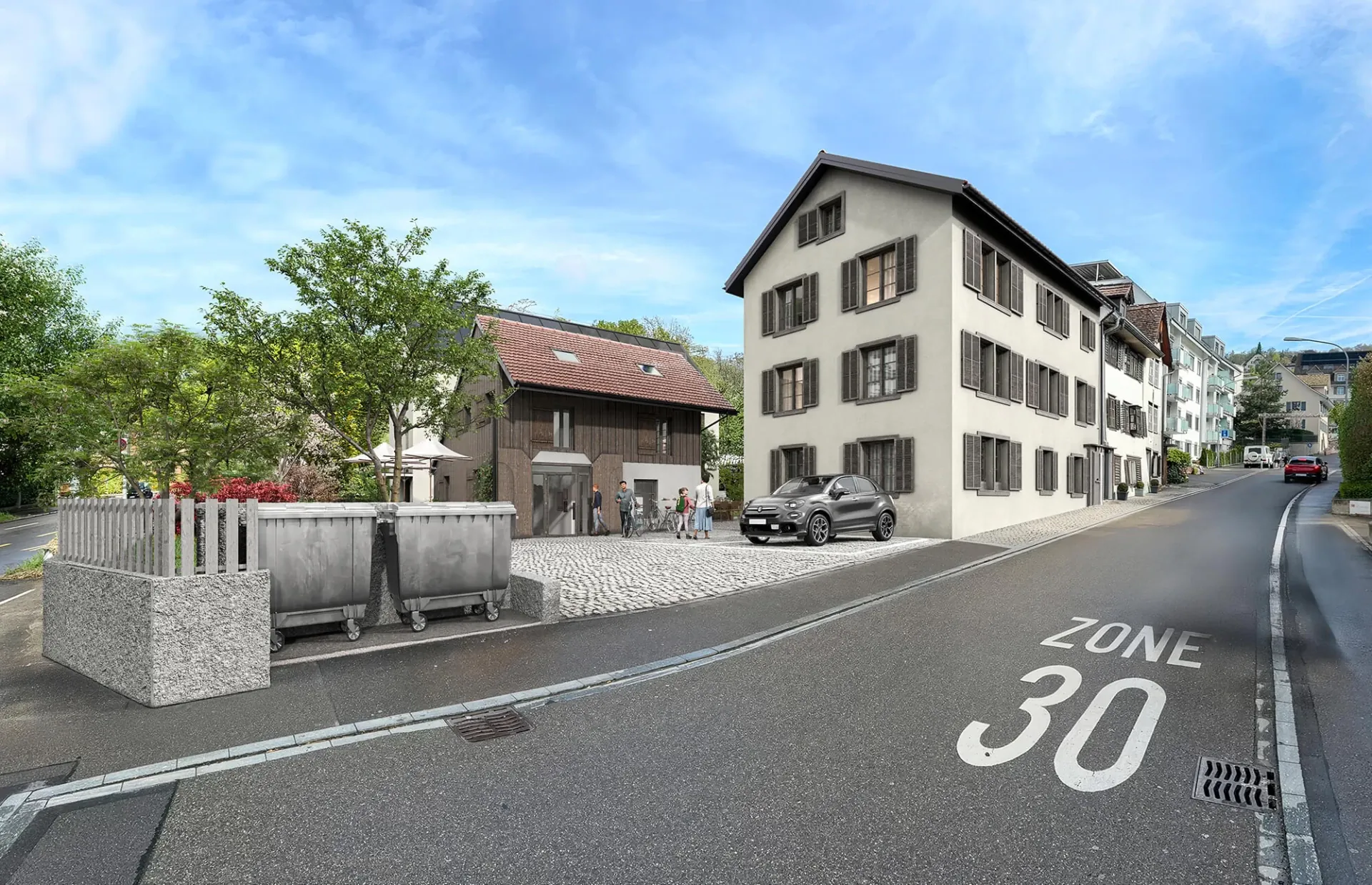
In the Swiss architecture and real estate industry, rendering is today the standard tool for three use cases: competition presentations (where a rendering must convince a jury where pure plans fall short), permit application visuals (where Swiss authorities require a legible integration into the existing context), and marketing imagery (where pre-sales or initial letting starts months before construction).
A high-quality architectural rendering is produced in three phases: first the Grey Stage rendering without materials — a pre-check to confirm perspective, framing and proportions. Then the material check rendering with all surfaces and lighting — an approval round for mood and material selection. Finally the final rendering at full resolution (typically 4K, 3840 × 2160 pixels) with post-production, retouching and delivery as JPG and PNG.
ArchVisual produces renderings as a specialist studio under Archify AG in Bern. The compute step is part of our craft — the studio setup uses render farms to deliver complex 4K images within the tight deadlines typical of Swiss marketing launches. Details on the use cases on our pages for architectural visualization, real estate visualization and interior visualization.
Related terms in the glossary
CGI (Computer Generated Imagery)
Umbrella term for all digitally produced imagery. Rendering is a subset of CGI — not the other way around.
BIM (Building Information Modeling)
Digital building modelling methodology that often serves as the basis for architectural renderings.
Rendering vs. visualization
Clarification of the difference between the pure compute step (rendering) and the complete end result (visualization).
All glossary entries
Back to the full overview of technical terms around 3D visualization.