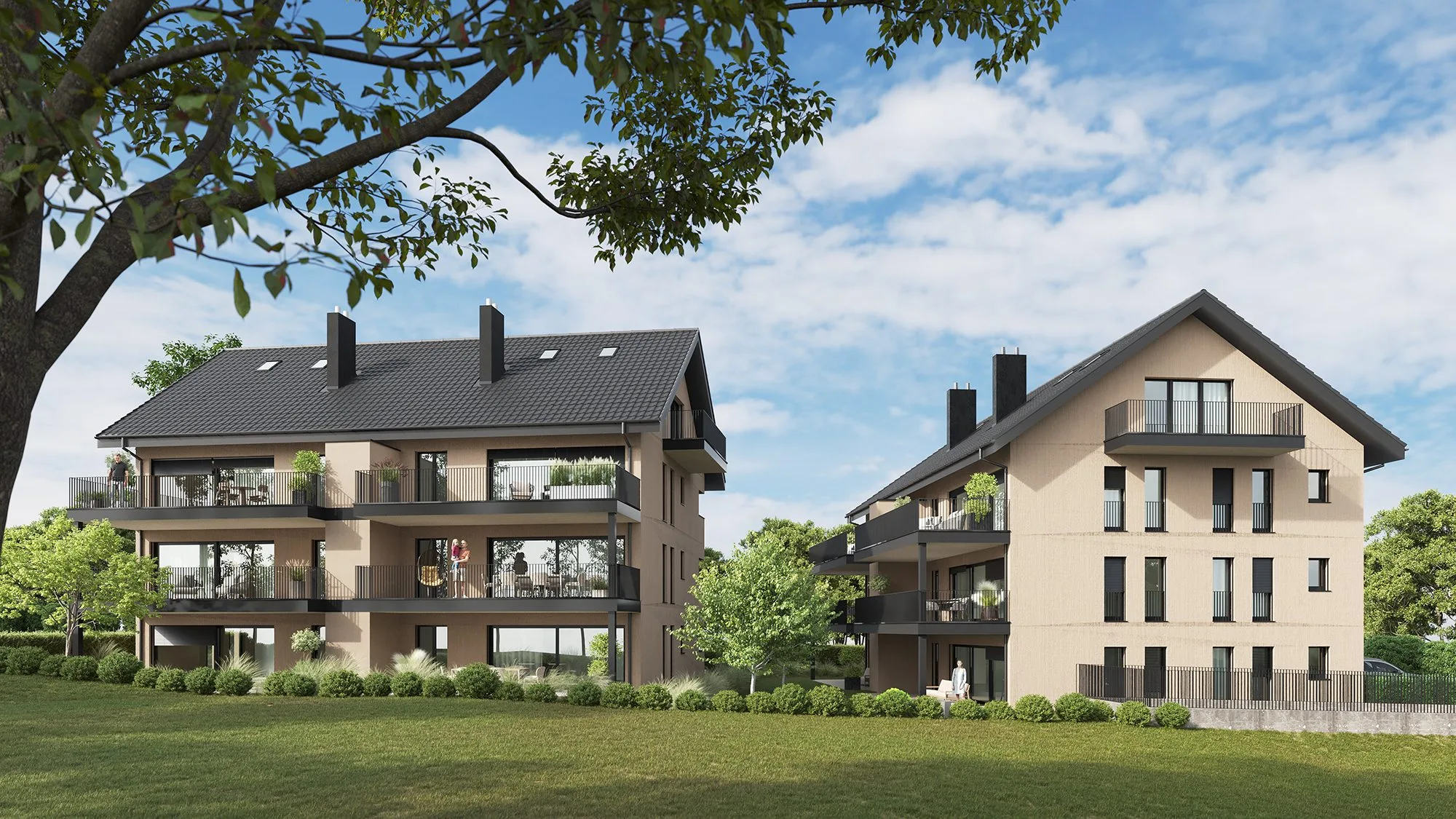
What is a 3D rendering?
A 3D rendering is the calculation of a photoreal image from a three-dimensional model. The render engine simulates the behavior of light, the reflective properties of materials and the shadows in a scene with such precision that the final result is indistinguishable from a photograph. In the Swiss architecture industry, the 3D rendering is the final step of a visualization pipeline — the image that ends up as the hero shot on homegate, in the competition entry or in the investor presentation.
Technically, rendering differs from 3D visualization in granularity: visualization is the umbrella term for the whole discipline (image strategy, modeling, materials, lighting, post-production); rendering is the specific calculation step where the model becomes a pixel image. More on the terminology distinction in our glossary entry “Rendering vs. visualization” or in the definition Rendering.
What sets a 3D rendering apart from a photograph: the photo depicts what really exists; the rendering depicts what will exist. For a building project that is fundamental — the rendering must convince today so that the project gets built tomorrow. That is precisely why the craft depth of the rendering (lighting, material accuracy, post-production) is more decisive than the post-processing of a photograph.
Three quality tiers — matched to the use case
Not every project needs a Premium rendering — and not every competition image makes it past the jury at Standard quality. We work with three clearly defined quality tiers so you can align the investment precisely with the use case. All three tiers are photoreal — the difference lies in material depth, lighting complexity and post-production effort.
from CHF 490
Photoreal rendering for standard marketing — homegate listings, brochures, first lease-up. PBR materials, correct lighting, 4K output. Ideal for 80% of Swiss residential projects.
- • 4K output (3840×2160)
- • PBR materials
- • 1 time-of-day mood
- • 2 revision rounds
- • Standard post-production
CHF 890 – 1 600
Competition and marketing hero level. Extra material depth, more complex lighting with multiple sources, enhanced post-production for atmosphere. For architecture competitions, premium marketing and luxury real estate.
- • 4K output + DIN A2 print
- • Extended PBR detail
- • 2-3 time-of-day variants
- • 3 revision rounds
- • Premium post-production
- • Detail renderings included
CHF 1 800 – 3 500
Maximum craft effort — custom materials, photographic lighting, multi-pass post-production. For international competitions, luxury real estate (CHF 5M+) and flagship projects with press exposure.
- • 8K output optional
- • Custom materials
- • Complex lighting setup
- • 4+ revision rounds
- • Multi-pass post-production
- • Photo compositing included
All tiers are photoreal and produced on the same render pipeline. The price difference reflects the additional effort in modeling, material depth and post-production — not a “higher quality” of the engine.
How does a photoreal rendering come together?
A photoreal rendering looks deceptively real because five disciplines work together beneath the surface — each its own studio craft, sharpened daily in our pipeline. That is the technical depth that distinguishes us as a specialist studio from a generalist office offering rendering as a side service.
Modeling: from CAD plans or an existing 3D model, we build the geometry needed for rendering — more precise than for plan drawings, with correct joints, profiles and connection details. For Premium renderings we model down to a few millimeters because detail inaccuracies show immediately under physically correct lighting.
Materials (PBR): every surface gets a material shader defining color, roughness, reflection, normals and sometimes subsurface scattering. PBR (Physically Based Rendering) ensures the material reacts correctly under daylight, blue hour or interior lighting — without manual tweaks.
Lighting: sun position computed from location, date and time (azimuth/elevation), HDRI sky for atmospheric scattering, artificial lights (interior, street lamps) calibrated in lumens. For High-End and Premium renderings we deploy bounce cards and custom lights as an architecture photographer would on set.
Render calculation: the render engine (V-Ray, Corona or Unreal — depending on the project) calculates per pixel where light rays land. Ray tracing for still images, real-time for interactive applications. For 4K with full global illumination, an image typically takes 2 to 4 hours on our render farm.
Post-production: from the raw render, color correction, tone mapping, vignetting, lens bokeh, chromatic aberration, grain and final compositing are added in Photoshop/Nuke — the same treatment a photo gets in Lightroom. This is where the difference between a “technically correct” and an “atmospherically credible” rendering plays out.
Examples from our rendering portfolio
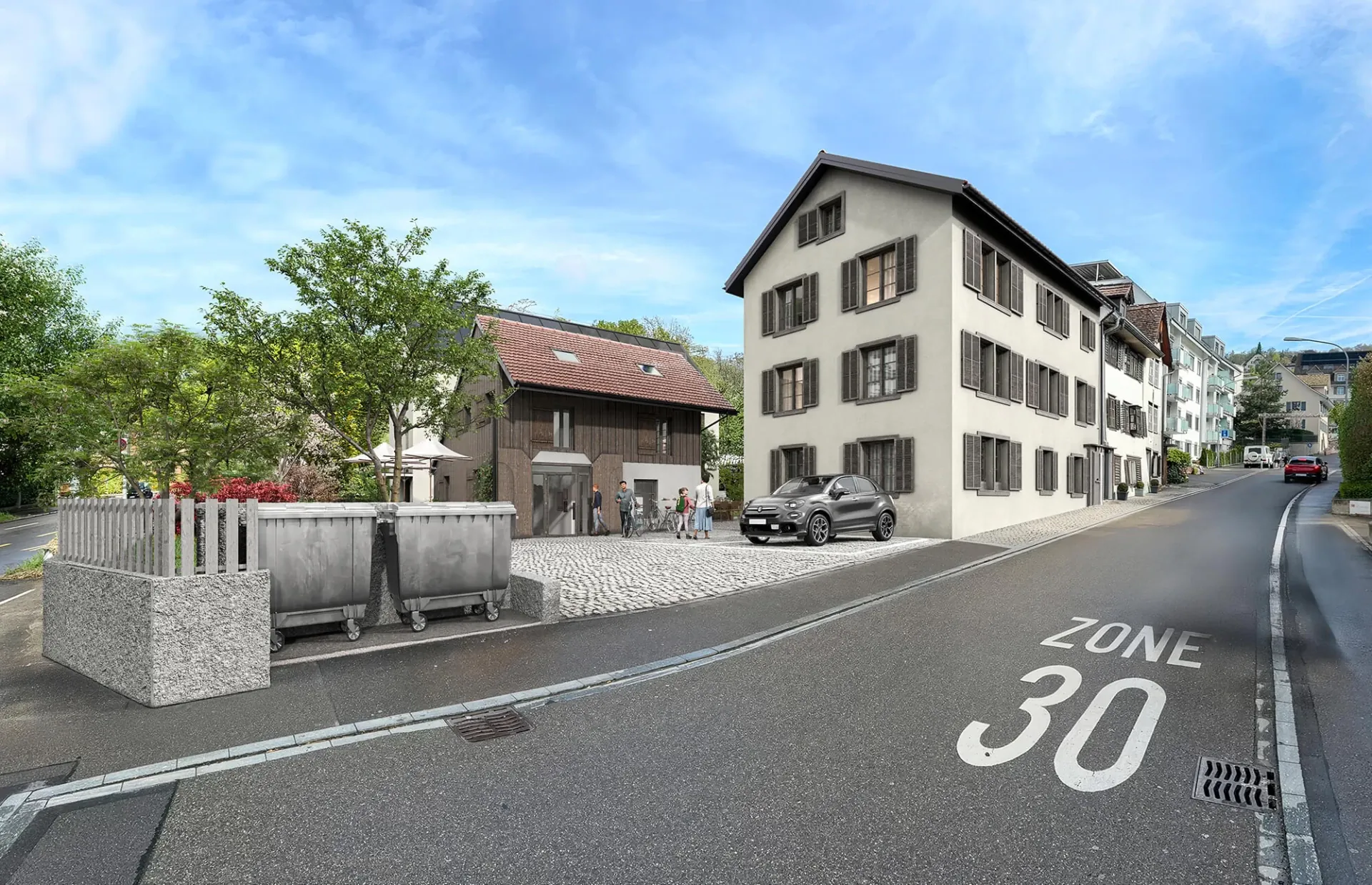
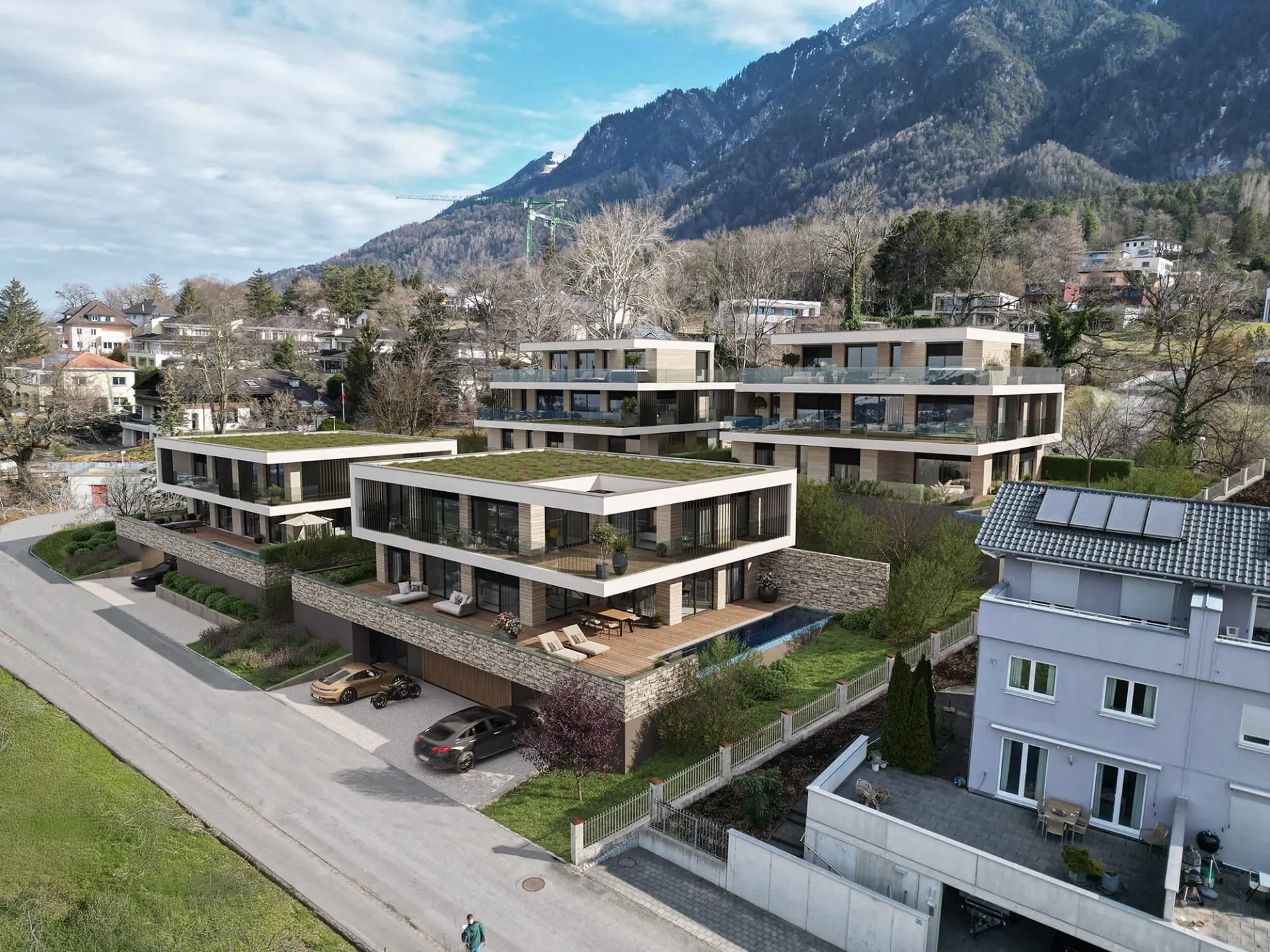
A selection from our High-End and Premium portfolio — renderings used in Swiss architecture competitions, luxury real estate campaigns and investor pitches. Full selection in the portfolio on the homepage or as the «Les Terrasses de Prêles» case study.

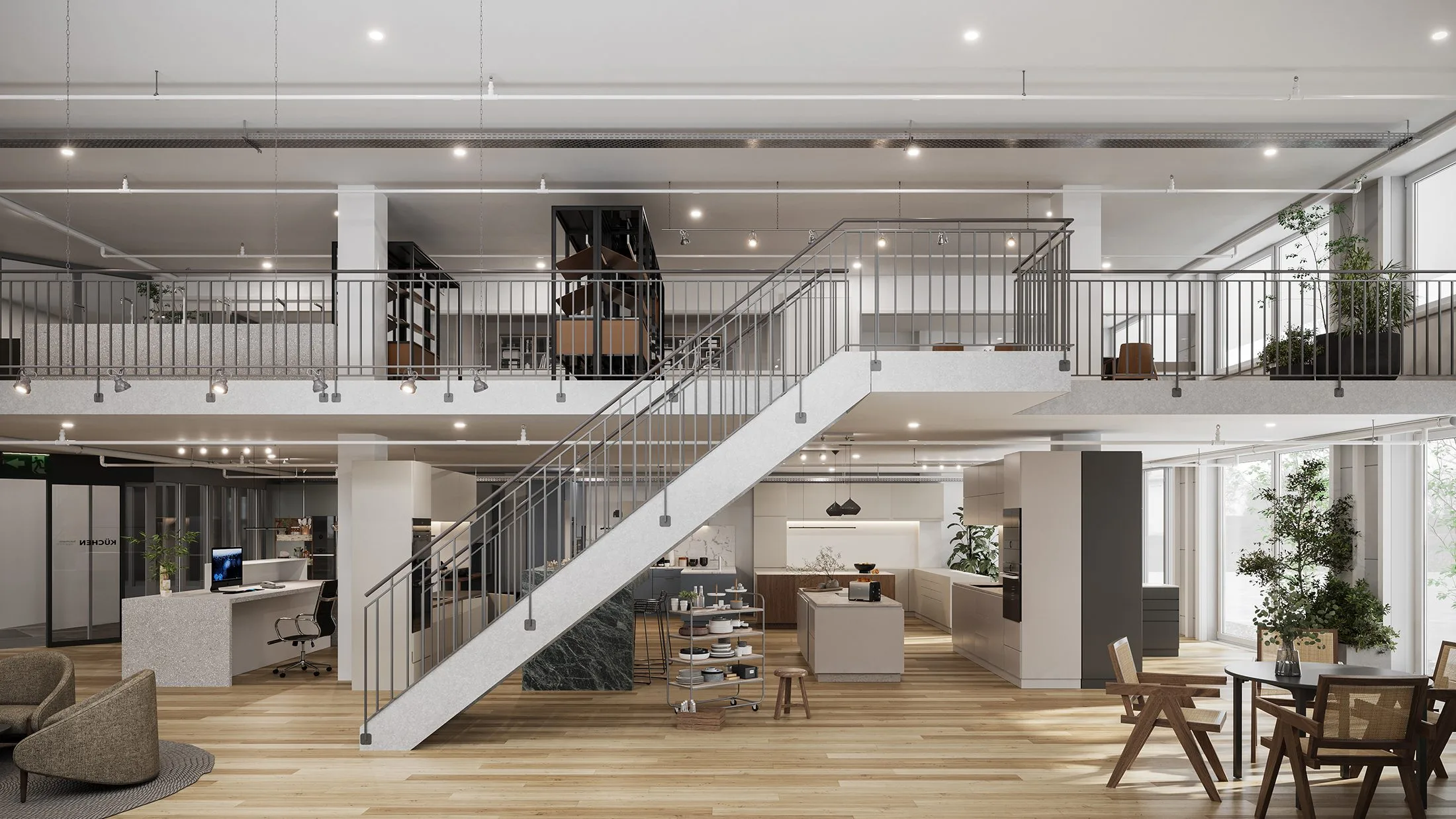
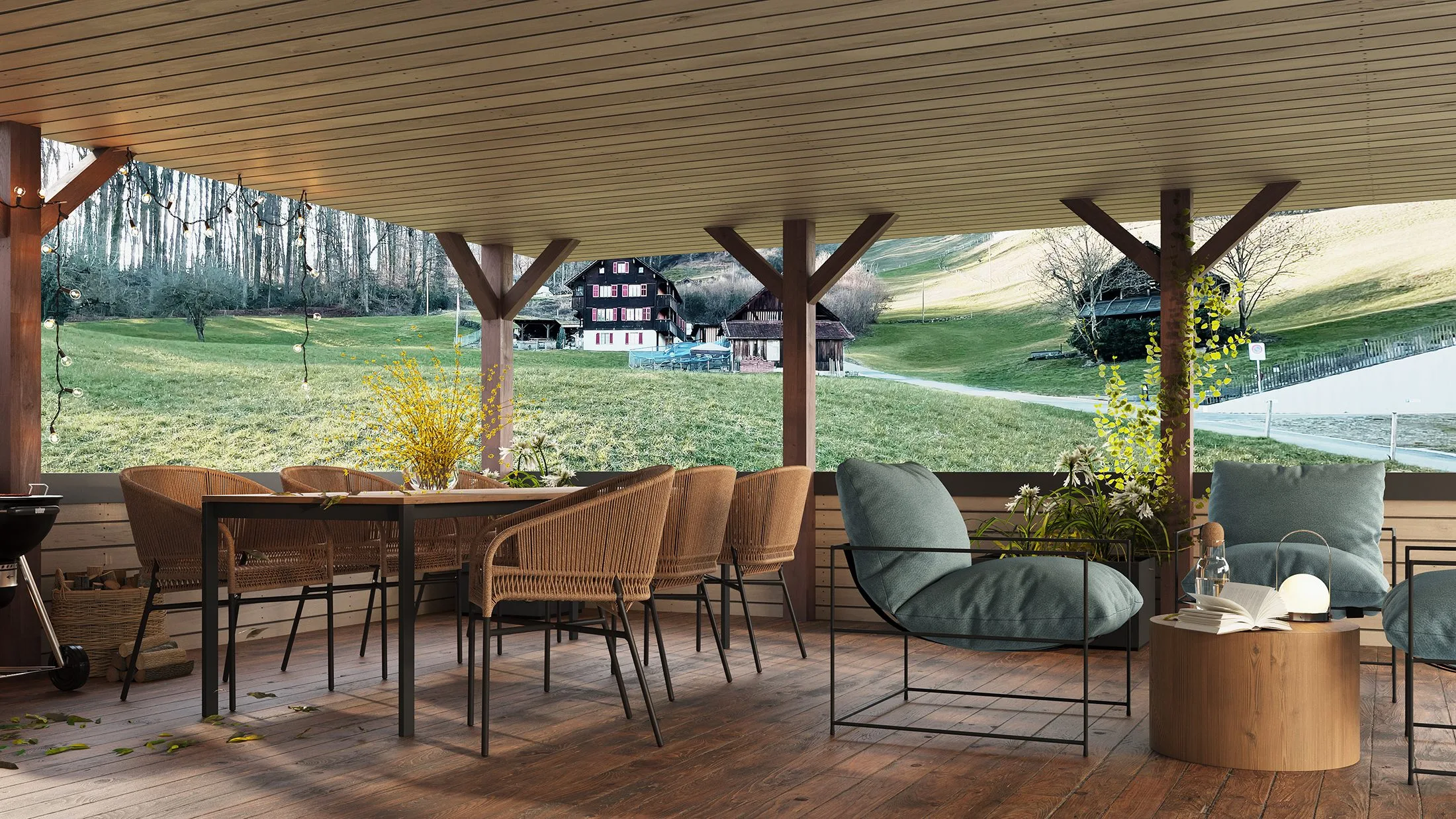
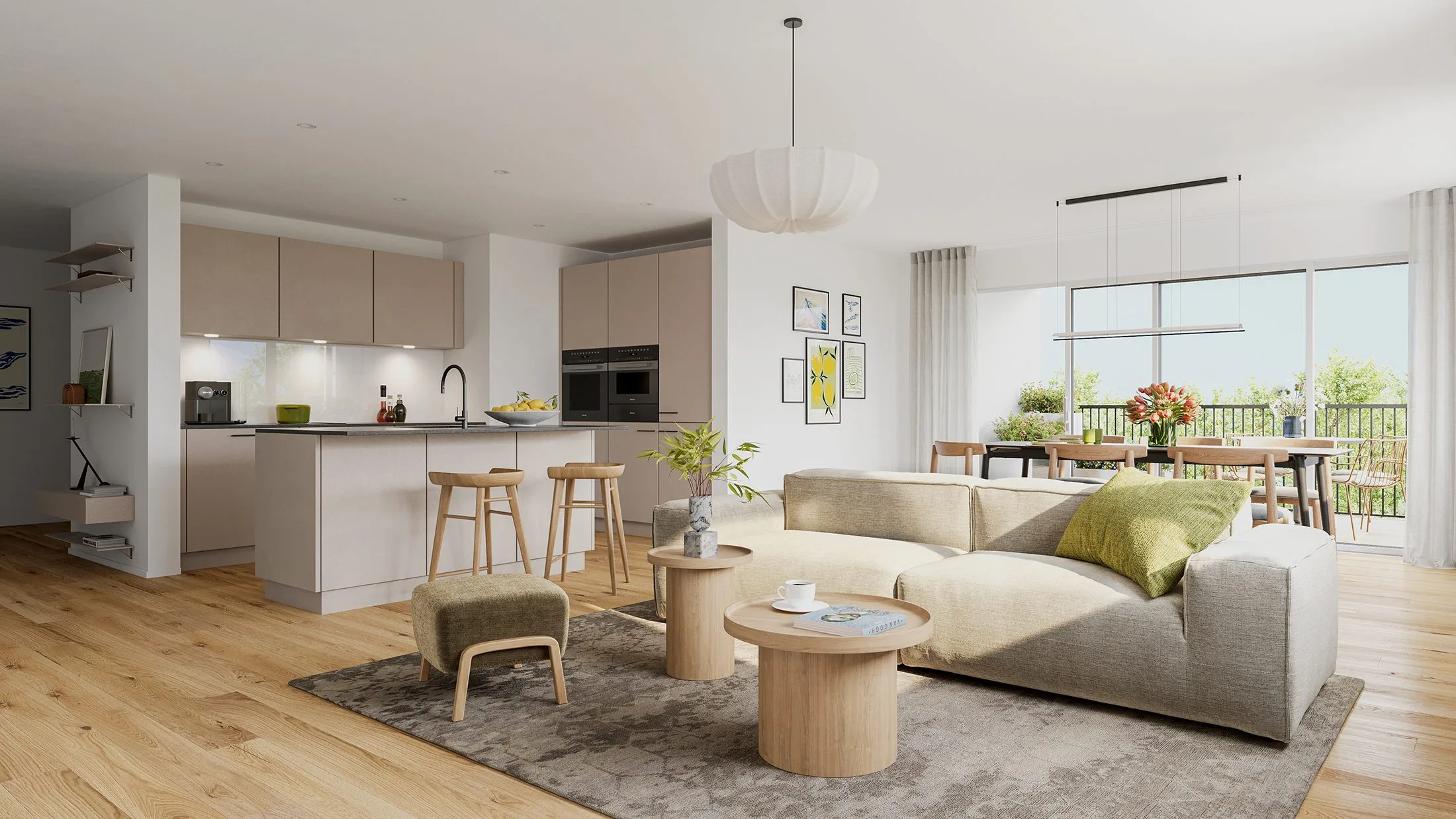
Render engines and pipeline
We work with three primary render engines — each with its strengths, each with a clear use field. This is not tool fetishism but craft pragmatism: an engine optimized for static architectural hero shots is inefficient for real-time 360° tours, and vice versa.
V-Ray
The studio gold standard for still architectural images. Highest render quality with correct physical light simulation. Use: competition hero shots, premium real estate marketing, print campaigns.
Corona Renderer
Faster than V-Ray at comparable quality, optimized for intuitive lighting. Use: interior moods, mid-volume marketing, projects with tight deadlines.
Unreal Engine 5
Real-time rendering with Lumen lighting and Nanite geometry. Use: 360° tours, architectural animations, interactive investor presentations, VR walkthroughs.
We pick the engine in the briefing call, depending on goal, budget and deadline. For most Swiss building projects, V-Ray is the right answer — for tight timing deadlines we move to Corona, for interactive applications to Unreal.
Our workflow in three steps
Briefing & Grey Stage
Quality tier, framing, time of day and mood are clarified in the briefing. You receive a Grey Stage render (no materials, no vegetation) for sign-off within 3 working days.
Materials, light & post-production
PBR materials are set, lighting is calibrated, the post-production stack is configured. You receive a material check for sign-off before the final calculation.
Final render & delivery
High-resolution final calculation on the render farm, multi-pass post-production, delivery as 4K or 8K file with print, web and portal versions.
Why ArchVisual for your 3D rendering?
Studio pipeline
V-Ray, Corona and Unreal as parallel pipelines, our own render farm in Switzerland. We choose the engine per project, not per office. Renderings are core business, not a side service.
Clear tier logic
Clear price-quality logic in three tiers, communicated transparently. You pay for the tier your use case needs — no more, no less. Competition hero ≠ homegate listing.
Swiss context
Studio in Bern, communication in DE/FR/EN. We know the requirements of Swiss building authorities, SIA standards, building permit formats and the typical marketing channels homegate, newhome, Comparis.
Looking for the service overview instead?
This page focuses on the technical craft of rendering. If you are looking for the five visualization disciplines (architecture, real estate, interior, exterior, 360°) in overview, go to the 3D visualization hub.
Go to the 3D visualization hub